
Bridgeport 72-Hour Feed Status
There is no official rolling three-day release table for Bridgeport. Bridgeport Correctional Center belongs to CT DOC, not a county sheriff. Bridgeport police handle temporary arrest processing and city records but do not publish a jail-style release roster. The sources reviewed also provide no feed cadence, retention period, or 72-hour filter.
The practical substitute is a repeated named-person check. Compare CT DOC status on each relevant day, review CT SAVIN custody alerts, and inspect the Judicial Branch docket for bond or disposition changes. If the question concerns several unnamed releases, no official source supplies a complete public list.
Check Bridgeport Three-Day Releases
Set the date range first, then follow the likely custody type. Keep a note of when each source was checked because public systems can update at different times.
- Search CT DOC for the person’s current status and facility.
- Review CT SAVIN or VINELink alerts received during the three-day span.
- Check the court docket for bail changes, disposition, sentence, dismissal, or violation activity.
- Determine whether a missing facility means release, transfer, a restricted record, or data delay.
- Use a focused DOC, police, or court request when the public trail remains incomplete.
Use the Bridgeport 24-hour release process when the question is limited to today. The longer window should add dates, not duplicate the same snapshot.
Bridgeport Three-Day Release Fields
Because there is no combined list, each field comes from the record most likely to create it. Court records explain legal action. DOC records explain state custody. CT SAVIN reports defined changes. Police records document the city arrest path.
| Field | Best source |
|---|---|
| Name and identity | CT DOC, court, or police record |
| DOC number and facility | CT DOC search or FOI |
| Release date and time | DOC record, CT SAVIN, court event |
| Release reason | Court order or discharge record |
| Bond conditions | Court or bail order |
| Transfer status | CT DOC and CT SAVIN |
| Photo | Agency record if public |
No blank field should be filled by inference. Ask the holding office for the nonexempt source record.
Bridgeport Weekend Release Checks
A three-day span helps when a court action, facility processing step, or public-data update crosses a weekend or holiday. It does not create a special weekend feed. Check the event date shown by the court or notification and the later date on which DOC status changed.
Bridgeport Police Records timing concerns reports, not release rosters. Its page says accident and incident reports are often available after several days and may take seven to ten working days for pickup, excluding holidays and weekends. It also states that arrest-related incident reports are unavailable from police until all charges are adjudicated. That delay cannot be used to infer continued custody.
For a specific person, the Bridgeport released-inmate record path helps reconcile the systems.
Bridgeport 72-Hour Record Fallback
Use CT DOC inmate information for state custody and Connecticut VINELink for matching custody changes. Then use the court docket for the legal reason. If the online record is stale or incomplete, request public release or discharge information from CT DOC External Affairs FOI.
A request should include legal name, date of birth if known, DOC number, facility, the exact three-day range, and the specific fields needed. For a Bridgeport police arrest without DOC commitment, route the request to city Police Records and the court instead. Federal matters require BOP and federal court records.
The BOP locator, a federal-only fallback, is pictured below.
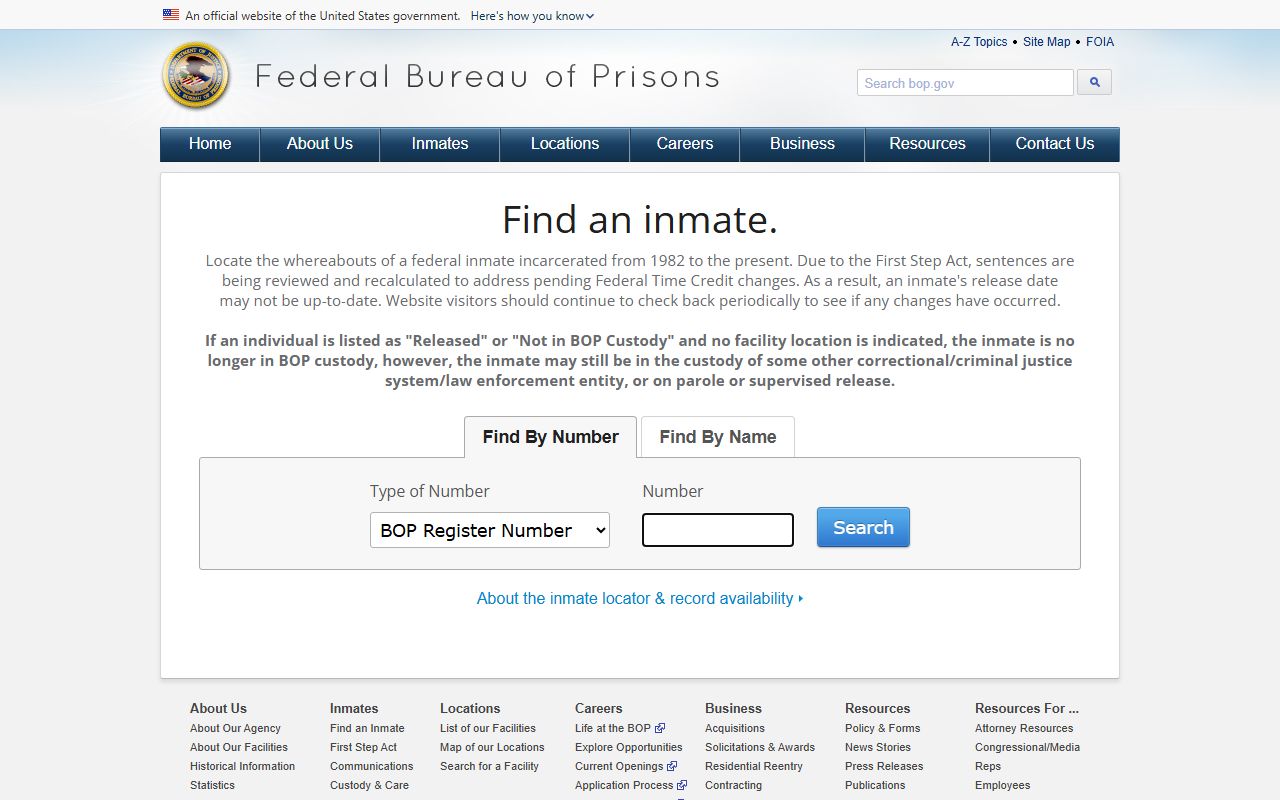
A person marked released or not in BOP custody may still be under another authority, so compare federal court and supervision records.
Why Bridgeport Lacks a Roster
The absence of a recent-release table is a structural fact. Connecticut uses a unified state correctional system. Bridgeport CC is a state jail and prison setting, while Bridgeport police are a separate municipal arrest and records source. There is no active county sheriff jail system to publish the familiar 72-hour roster.
That division spreads the release trail across agencies. DOC may hold custody dates, the court may hold the order, CT SAVIN may report the event, and Bridgeport police may hold arrest paperwork. A sound review preserves those source boundaries.
Recheck Bridgeport Release Status
Run the CT DOC search more than once across the date span when a very recent change matters. Record the time checked and compare the facility field, not just the name result. A new facility is evidence of transfer, while release to parole signals community release under supervision.
CT SAVIN is designed for change events and can help bridge a lagging public search. Yet it is not a permanent archive. For an event already several months old, the court docket, DOC discharge record, or formal records response is more useful.
Note: The three-day method improves coverage around delayed updates, but only an originating record confirms the release terms.
Bridgeport Court Events Over 72 Hours
CT SAVIN court alerts include changes in bail, hearings, disposition, probation-violation notices and decisions, and sentence-reduction decisions. These events can explain why a person left custody without any DOC sentence discharge.
Read the court event with the custody record. A dismissal or nolle may relate to release, while a new bond or promise to appear can end pretrial detention. A sentence may instead lead to continued or transferred DOC custody. The docket supplies the legal context that a release alert alone cannot provide.
Audit Bridgeport Three-Day Results
A reliable three-day review keeps a small chronology. Record the event date, the system that reported it, the status language, the facility, and the time of each check. This prevents a later update from being mistaken for an event that occurred on the day the screen was viewed.
Begin with the first CT DOC result in the range and compare it with the last. If the facility changes, investigate transfer before calling it release. If the status changes to parole or discharge, compare CT SAVIN and BOPP or court data. If the person disappears, consider name variation, record restrictions, federal custody, or police-only processing before drawing a conclusion.
Next, align court activity. A bail change may precede release from pretrial custody. A sentence can result in continued state custody rather than freedom. A dismissal or nolle can explain departure, but other dockets or holds may still affect whether the person actually left. The court clerk or source order can clarify a public entry that is too brief.
Use agency contact lines for routing, not for unsupported conclusions. Bridgeport Police Records states that report information is not given over the telephone. Bridgeport CC’s facility line can direct a caller, while public release documentation belongs through DOC’s search and FOI channels. A phone call that yields no details is not evidence that no release occurred.
Finally, preserve the three-day limit. An older court disposition or an earlier custody transfer should not be presented as a release inside the chosen window. When the timing cannot be verified, say that the public sources are inconclusive and request the dated record. This is more accurate than assembling a list from unrelated search results or news reports.
Classify Bridgeport Release Results
Separate state and federal results. The BOP locator covers federal offenders from 1982 to the present and may display a release date or “Not in BOP Custody.” That label means BOP custody ended, but another correctional, court, parole, or supervision authority may remain involved.
For state results, release to parole is community release with supervision. Sentence discharge is different. A court-ordered pretrial release is different again. Preserve the exact source phrase so the three-day review does not turn several legal events into one vague category.
When checking after a weekend, do not imply that a report made available Monday proves release occurred Monday. The dated custody event or court order controls. A delayed report is only evidence of when the public document became available.
Identity reconciliation matters across three days because more than one person may share a name. Use the DOC number, docket number, date of birth where public, court location, and facility. Keep separate records separate until identifiers match. If an alert identifies a transfer while a court result shows a disposition, do not assume both refer to the same event without checking the person and date.
A three-day result should also state its source. Label DOC custody, CT SAVIN notification, court order, police record, and BOP result distinctly. That source label lets a reader understand what is confirmed and what still needs an official record.